
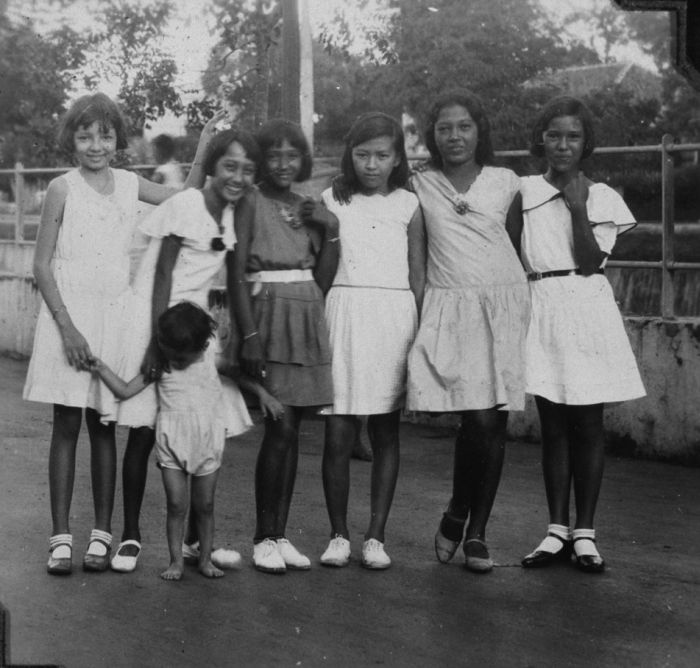
The silence surrounding the Dutch East Indies—the loss of a life in a country that no longer exists.
In de aanloop naar de jaarlijkse herdenking van het einde van de Japanse bezetting op 15/8/1945 is het niet verwonderlijk, dat ook in herinnering wordt geroepen wat dat met de Indische gemeenschap heeft gedaan. Ellen Deckwitz wijst terecht op het misverstand wat kennelijk leeft, dat dat het zwijgen richting de overheid is. Integendeel, de Indische gemeenschap heeft zich constant geroerd.
(NRC 11/8/26 Geen Indisch zwijgen maar Hollandse hardhorendheid). Het is de overheid die er constant doof voor is geweest. Na dat gezegd te hebben, zou je denken, dat Deckwitz de afslag maakt terug naar wat het Indisch Zwijgen echt is: het intergenerationeel trauma van de eerste generatie Indische Nederlanders in Nederland. Maar als ik het goed lees, dan lijkt zij de speciale aandacht daarvoor als een misverstand te zien. Immers, dat is niets anders dan het trauma wat vergelijkbaar speelt bij bijv. Holocaust slachtoffers.
Ik geloof mijn ogen niet. Met andere woorden, dat trauma is niet het Indisch Zwijgen, maar wat de overheid van dat Indisch Zwijgen maakt. Ellen Deckwitz miskent dan de grond voor dat zwijgen, namelijk het verlies van een leven in een land dat plots niet meer bestaat. Dat is meer dan alleen het oorlogs- en geweldstrauma, omdat het gaat om het wegpoetsen van je verleden. Dat neem ik Ellen Deckwitz zeer kwalijk.
In the run-up to the annual commemoration of the end of the Japanese occupation on August 15, 1945, it is hardly surprising that the impact on the Dutch-Indies community is being recalled. Ellen Deckwitz rightly points out the prevailing misconception that this community maintained a silence toward the government. On the contrary, the Dutch-Indies community has consistently made its voice heard (NRC, August 11, 2026: “Not Dutch-Indies silence, but Dutch deafness”). It is the government that has consistently turned a deaf ear. That said, one might expect Deckwitz to pivot back to what the “Dutch-Indies Silence” truly is: the intergenerational trauma experienced by the first generation of Dutch-Indies people in the Netherlands. Yet, if I read her correctly, she seems to view the special attention paid to this as a misunderstanding. After all, she implies, it is no different from the trauma experienced by Holocaust survivors, for instance.
I can hardly believe my eyes. In other words, that trauma is not the “Dutch-Indies Silence” itself, but rather what the government makes of that silence. In doing so, Ellen Deckwitz fails to acknowledge the root cause of that silence: the loss of a life in a country that suddenly ceased to exist. This goes beyond mere trauma resulting from war and violence, as it involves the erasure of one’s past. I take strong issue with Ellen Deckwitz on this point.
Ricky Turpijn