Open borders and the welfare state. Newcomers must now reassure others.
Opinie | ‘Ik lees het boekenweekessay wel degelijk als een universeel verhaal’ – NRC
Ehsan Jami (NRC 21/3/26) in zijn opiniestuk stelt, dat elk systeem grenzen kent aan zijn absorptievermogen. Een puur economische keuze gestoeld op de idee van econoom Milton Friedman: een land kan open grenzen hebben, of een uitgebreide verzorgingsstaat, maar niet beide in onbeperkte vorm tegelijk. Dat moet de koopman in de Nederlander aanspreken, toch?
Stije Hofhuis eerder in het NRC giet daar nog een cultureel sausje overheen. De Nederlandse cultuur verdient namelijk bescherming, niet omdat ze superieur is, maar omdat dit Nederland is; de enige plek waar de Nederlandse cultuur kan bestaan. En dat moet dan de dominee in de Nederlander aanspreken, toch?
Ik zie deze pleidooien als een waarschuwing, dat de Nederlandse koopman en dominee het niet langer pikken, dat de eigenheid van hun Nederlandse omgeving, de stam waartoe zij behoren, dreigt te verdwijnen. Met als gevolg, dat aan de nieuwkomers steeds minder plek wordt gegund. De verkiezingsuitslagen laten al decennia zien, dat steeds meer mensen onder de harde slogan “eigen volk eerst” de door Jami voorgelegde keuze al lang hebben gemaakt. Onverholen van Hans Janmaat in de 80er jaren van de vorige eeuw tot de opstomende FvD in de recente verkiezingen. Verholen zoals in de migratieparagraaf van het minderheidskabinet Jetten.
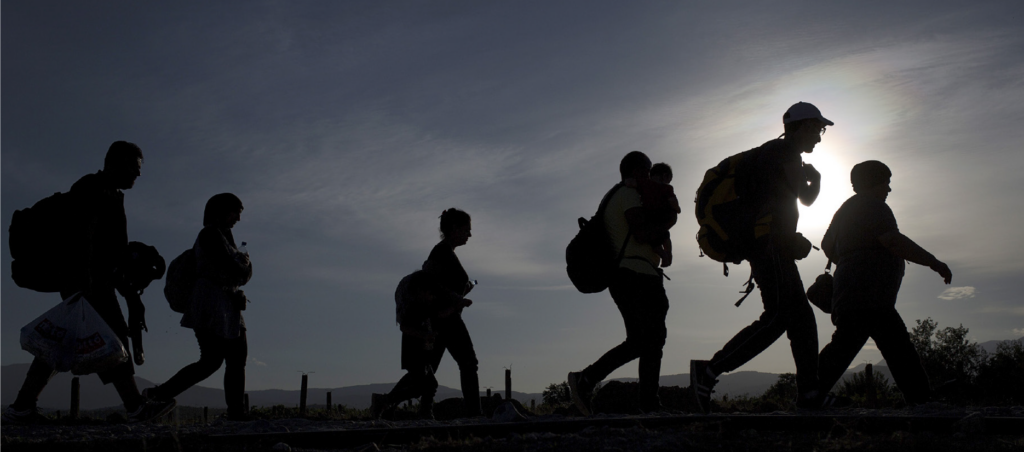
Een deel daarvan heeft wel degelijk een superieur mensbeeld van zichzelf. Maar een ander deel heeft echt angst voor het doembeeld van het verdwenen dorp van Wim Sonneveld. Die laatste groep wil gerustgesteld worden. Niet door de overheid, want daarin is het vertrouwen al lang zoek. Maar door de nieuwkomers zelf. Het is de plicht van de nieuwkomers zich bewust te zijn van de angst die leeft bij de ander. Maar nog veel meer om samen met die ander over die angst te praten.
Ehsan Jami (NRC 21/3/26) argues in his opinion piece that every system has limits to its absorption capacity. A purely economic choice based on the idea of economist Milton Friedman: a country can have open borders or an extensive welfare state, but not both in an unlimited form simultaneously. That should appeal to the merchant in the Dutchman, shouldn’t it?
Stije Hofhuis, earlier in the NRC, adds a cultural twist to this. After all, Dutch culture deserves protection, not because it is superior, but because this is the Netherlands; the only place where Dutch culture can exist. And that should appeal to the preacher in the Dutchman, shouldn’t it?
I view these pleas as a warning that the Dutch merchant and preacher will no longer tolerate the fact that the distinctiveness of their Dutch environment, the tribe to which they belong, is in danger of disappearing. As a result, newcomers are granted less and less space. Election results have shown for decades that, under the harsh slogan “our own people first,” an increasing number of people have long since made the choice presented by Jami. Openly, from Hans Janmaat in the 1980s to the surging FvD in recent elections. Invisibly, as in the migration section of the Jetten minority cabinet.
A part of this group certainly holds a superior view of itself. But another part genuinely fears the doomsday scenario of the vanished village conceived by Wim Sonneveld. This latter group wants to be reassured. Not by the government, for trust in that has long been lost. But by the newcomers themselves. It is the duty of the newcomers to be aware of the fear that lives within the other. But even more so, to talk about that fear together with that other person.
Ricky Turpijn